

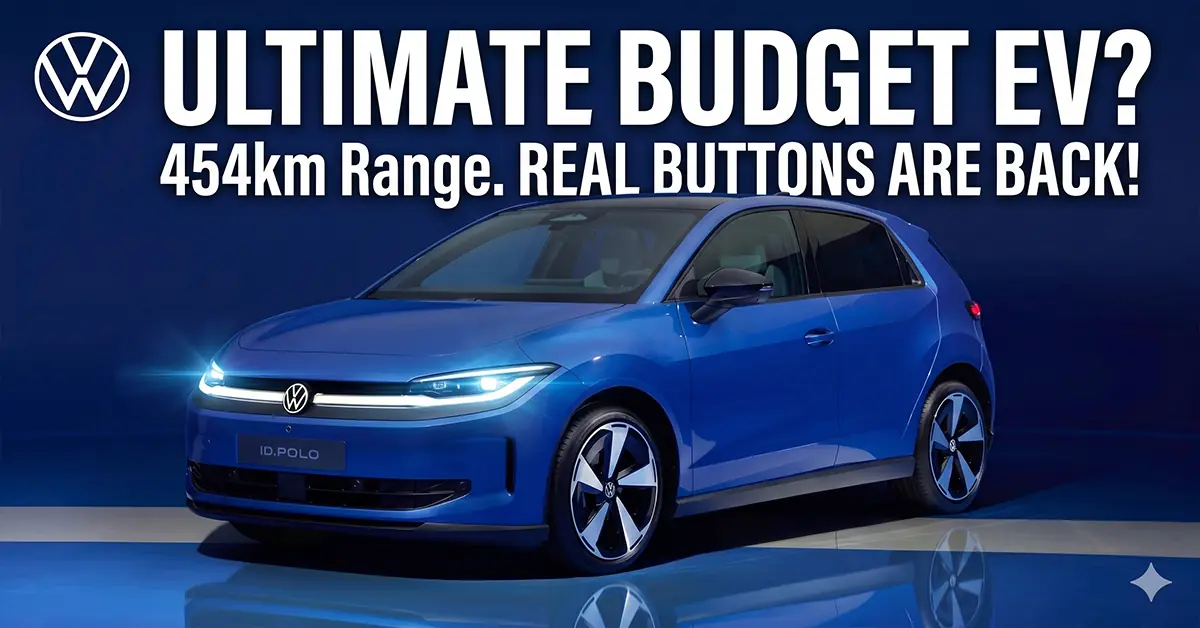
Are you ready to see a beloved classic completely reimagined for the modern electric era? The wait is finally over! With the new Volkswagen ID Polo EV unveiled, the automotive giant has masterfully blended its legendary hatchback heritage with cutting-edge, emission-free technology. If you’re looking for an affordable EV that doesn’t compromise on range, practicality, or physical controls, read on to discover exactly why this car is making global headlines.
A Familiar Face Built on a Revolutionary Platform
When the new Volkswagen ID Polo EV unveiled its production-ready form in April 2026, it confirmed what lifelong fans were hoping for: a car that honours a 50-year legacy. Moving away from purely numerical naming conventions (originally teased as the ID.2all concept), Volkswagen is proudly reviving its iconic badges. Built on the brand’s highly advanced Volkswagen MEB+ platform, this front-wheel-drive Volkswagen electric hatchback introduces the brand’s fresh “Pure Positive” design language.
Visually, the ID.Polo retains its iconic DNA but adds a distinct, futuristic flair that turns heads:
- Signature Styling: It features a glowing VW badge, a sleek LED light bar, and hidden C-pillar door handles reminiscent of the original Mk1 Golf.
- Upgraded Dimensions: At 4,053 mm long and 1,816 mm wide, it’s practically identical to a traditional Polo on the outside but offers interior space comparable to a larger Golf.
- Incredible Practicality: You get a generous 441 litres of boot space, which easily expands to an impressive 1,240 litres with the rear seats folded down.
Also Read: 2026 Bajaj Chetak Arrives: Faster, Smarter, and Cheaper
Volkswagen ID Polo EV Battery, Range, and Performance
Range anxiety is rapidly becoming a thing of the past. To make affordable EVs 2026 a reality for everyone, Volkswagen is offering two distinct EV battery options to suit different driving needs:
- 37 kWh LFP Battery: Designed perfectly for city commuters, this entry-level option produces 135 hp, offering a highly practical 329 km of range. It supports 90 kW DC fast charging for quick top-ups.
- 52 kWh NMC Battery: For those seeking longer road trips, this larger pack delivers 211 hp and a remarkable 454 km (WLTP) range. It features rapid 105 kW DC fast charging, taking your battery from 10% to 80% in roughly 24 minutes.
For the performance enthusiasts, the excitement doesn’t stop here. Volkswagen has officially confirmed an upcoming ID.Polo GTI. This sporty hot hatch will pack an exhilarating 226 horsepower, bringing iconic GTI thrills and aggressive styling into the zero-emission world.
Tech and Interior: The Triumphant Return of Physical Buttons!
Perhaps the most universally celebrated feature of the new ID.Polo is its brilliant interior philosophy. Volkswagen heavily monitored customer feedback and completely eliminated the frustrating, unlit touch-slider controls found in older electric models.
The minimalist yet premium cabin strikes the perfect balance between futuristic tech and tactile usability:
- Smart Displays: A massive 13-inch central touchscreen is seamlessly paired with a 10-inch digital driver display.
- Physical Buttons Are Back: You will find real, tactile buttons on the steering wheel, a physical rotary dial for volume, and dedicated switches for your basic climate controls!
- Retro Golf Mode: A highly engaging software easter egg allows drivers to switch their digital gauge cluster to a retro layout inspired by the classic Golf, complete with a vintage tape-deck animation on the infotainment screen.
Also Read: 2026 Renault Triber Price and New Features: Should You Buy It?
Pricing and Release Date
Volkswagen has aggressively positioned the Polo EV price to strongly compete with budget-friendly rivals like the Renault 5 and the MG4. In European markets (starting with Germany), the base “Trend” variant starts at an incredibly accessible €24,995 (approximately Rs 27.76 lakh). Pre-sales have officially commenced, with widespread dealership deliveries expected by the summer of 2026.
Conclusion
The transition to electric vehicles doesn’t have to mean losing the charm of the cars we love. The ID.Polo proves that you can embrace a zero-emission future while retaining classic styling, phenomenal practicality, and user-friendly technology. By pairing an impressive 454 km range with a highly attractive price point, Volkswagen hasn’t just built a great electric car; they’ve successfully secured the Polo’s legendary status for the next generation of drivers.
Also Read: April 30 Launch: Oben Electric New Naked Sports Bike 2026 Exposed!
FAQs
1. What is the range of the new Volkswagen ID.Polo EV?
Ans: The electric Polo offers up to 454 kilometres (WLTP) of range if you opt for the larger 52 kWh battery pack. The smaller 37 kWh battery delivers a highly respectable 329 kilometres, making it a perfect fit for daily urban commuting.
2. Does the electric Polo have physical buttons?
Ans: Yes! In a major shift from previous ID models, Volkswagen has actively reintroduced physical buttons and a tactile rotary dial on the steering wheel and centre console. This makes volume adjustments and climate control significantly easier to use while driving.
3. How much will the ID.Polo cost?
Ans: The base variant is priced highly competitively, starting at €24,995 (approximately Rs 27.76 lakh) in Germany. Global pricing will vary slightly based on local taxes and import duties, but it is intentionally designed from the ground up to be a budget-friendly mass-market EV.
4. Will there be an ID.Polo GTI?
Ans: Absolutely. Volkswagen has officially confirmed that an ID.Polo GTI variant will be launched later in 2026. It will feature a powerful 226-horsepower motor, sportier bumpers with honeycomb grilles, and the brand’s signature GTI red accents.
5. How long does it take to charge the ID.Polo EV?
Ans: Thanks to its advanced MEB+ architecture, the car supports DC fast charging up to 105 kW (for the 52 kWh battery model). This allows you to rapidly charge the battery from 10% to 80% in approximately 24 minutes, minimizing your wait time at charging stations.