

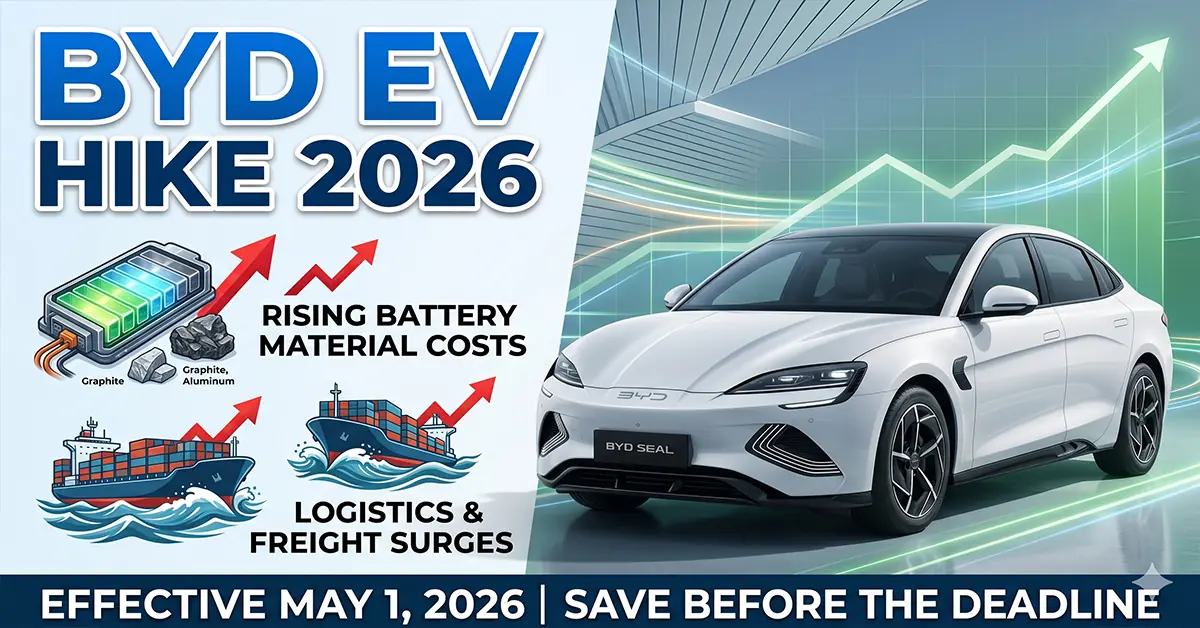
Planning to upgrade to a premium green vehicle? Act fast. The BYD electric vehicle price hike for 2026 is officially rolling out, and it will make your dream car noticeably more expensive. In this comprehensive guide, we explore exactly why these price adjustments are happening, which models are affected, and how to save money before the May deadline.
The Core Reason: Why is BYD Hiking EV Prices by 3%?
Building high-performance electric cars relies on complex supply chains. BYD recently announced an impending price increase of up to 3% across its entire portfolio. Taking effect on May 1, 2026, this hike ranges from ₹50,000 to ₹1.7 lakh. But what is triggering this spike?
The primary cause is a sharp surge in rising EV battery costs coupled with unavoidable logistical disruptions across global trade routes.
1. The Global Supply Chain and Skyrocketing Battery Material Costs
A major driver behind the BYD electric vehicle price hike in 2026 is the increasing cost of essential raw materials. To manufacture an efficient EV, automakers require critical elements like aluminium, sulfur, and synthetic graphite.
- The Synthetic Graphite Crisis: Synthetic graphite is absolutely essential for creating EV battery anodes. Derived from petroleum coke, its price is directly linked to the fluctuating global oil market, making these raw materials significantly more expensive.
- Impact on Final Pricing: As battery packs make up a massive percentage of an EV’s manufacturing cost, electric vehicle pricing trends heavily depend on battery production. Any inflation in raw materials must ultimately be passed down to consumers.
2. Escalating Freight Charges and the Strait of Hormuz Conflict
Beyond raw materials, automakers are battling unprecedented shipping costs. Tensions surrounding the Strait of Hormuz have disrupted vital maritime trade routes.
- Sky-High Shipping Insurance: War-risk premiums for commercial cargo ships have reached multi-year highs, making international freight immensely expensive.
- Severe Logistics Delays: Moving completely built cars and essential manufacturing components globally has become much costlier. To protect operational profit margins, brands like BYD are forced to adjust their retail pricing.
Also Read: Massive Volvo India Price Hike 2026: See the New Car Rates Here!
Which BYD Models Are Affected by the Price Increase?
This comprehensive up-to-3% price adjustment impacts the entire passenger vehicle lineup. If you are eyeing a specific green vehicle, here is exactly how the BYD EV price increase will change the financial landscape:
- BYD Atto 3: As a highly popular electric SUV, this model will likely see a jump of ₹50,000 to ₹1 lakh, pushing its entry-level price higher.
- BYD eMAX 7: Families looking at this spacious electric MPV will face a projected hike of approximately ₹55,000 to ₹59,000.
- BYD Seal: The luxury premium electric sedan, known for blistering performance, will experience an estimated price increase ranging from ₹80,000 to ₹1.6 lakh.
- BYD Sealion 7: Serving as the brand’s flagship SUV, it will see the highest financial impact, swelling by up to ₹1.7 lakh.
What Should Future EV Buyers Do Right Now?
If you are on the fence about purchasing a new electric car, strategize immediately. With rising EV battery costs setting new industry standards, waiting could be an expensive miscalculation. Here are three actionable steps:
- Lock in the Current Price: Most dealerships will honour existing ex-showroom prices for firm bookings made before the May 1, 2026 deadline.
- Compare Industry Rivals: BYD is not the only manufacturer feeling the heat. Major competitors are also adjusting pricing structures. Compare battery range and final on-road costs across brands.
- Explore Financing Options Today: Getting your car loan approved right now at current valuations saves thousands of rupees over your loan tenure.
Conclusion
In summary, the BYD electric vehicle price hike in 2026 is a direct reflection of broader geopolitical issues and skyrocketing battery material expenses. While an increase of up to 3% might seem modest, it translates to a hefty sum for premium vehicles. By understanding these electric vehicle pricing trends, you can make a smart, informed financial decision. Do not wait until May—secure your dream EV at today’s prices!
Also Read: EMotorad Viper Electric Cycle Price in India: 85km Range EV!
Frequently Asked Questions (FAQs)
Q1: When does the BYD EV price hike take effect?
Answer: The revised pricing structure for all BYD models officially comes into effect on May 1, 2026.
Q2: How much will the BYD Atto 3 cost after the price increase?
Answer: While exact variants will differ, buyers can expect the BYD Atto 3 to become ₹50,000 to ₹1 lakh more expensive starting in May.
Q3: Why are EV battery costs rising in 2026?
Answer: Battery manufacturing relies heavily on materials like synthetic graphite and aluminium. Global supply chain issues and high oil prices have significantly raised the cost of these crucial inputs.
Q4: Are other electric vehicle brands raising their prices too?
Answer: Yes, the price adjustment is an industry-wide trend. Several other major automakers are also increasing their passenger vehicle prices due to similar logistical, inflation, and manufacturing pressures.