

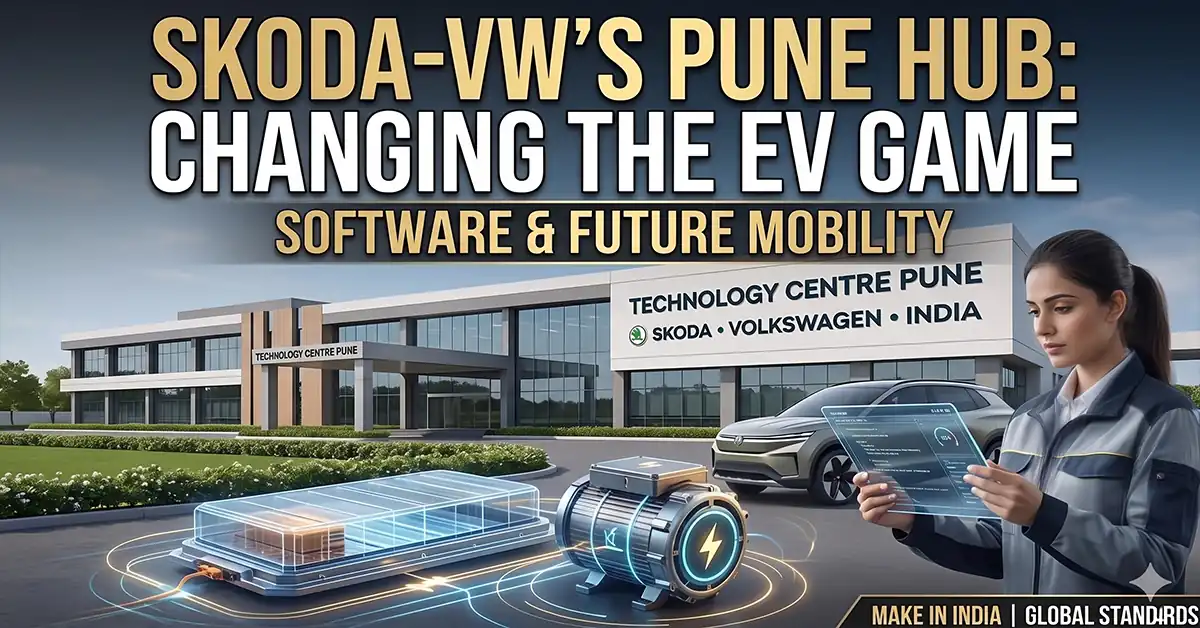
The automotive landscape in India is shifting gears rapidly, and the electric vehicle revolution just received a massive, high-tech upgrade! If you are curious about the future of green mobility, software-driven cars, and cutting-edge engineering, you are in the perfect place. Today, we are diving deep into the recently inaugurated Skoda Volkswagen new R&D centre in Pune, exploring exactly how this massive facility is poised to shape the next generation of global and domestic automobiles.
The Dawn of a New Era: Inside the Baner Facility
In April 2026, Skoda Auto Volkswagen India Private Limited (SAVWIPL) took a monumental leap forward by significantly expanding its research and development footprint. They officially inaugurated a brand-new wing of their Technology Centre Pune (TCP), strategically located in the prime urban hub of Baner, Pune.
Spanning an impressive 33,000 square feet, this state-of-the-art facility is far more than just standard office space. It is meticulously designed to comfortably house over 250 top-tier engineers and developers. When combined with their existing engineering base at the nearby Chakan manufacturing plant, the company now boasts a formidable regional workforce of over 450 engineers. This dedicated team is actively engaged in pushing the boundaries of both domestic and international automotive projects, firmly cementing India’s position as a powerhouse of global auto innovation.
Also Read: 5 Upcoming Midsize SUVs to Rival Hyundai Creta in 2026
Why This Hub is a Game-Changer for Future EVs
As the global automotive market rapidly transitions away from traditional fossil fuels, automakers must adapt or risk being left behind. The Skoda Volkswagen new R&D centre in Pune was strategically built to be at the absolute forefront of this technological transition. The facility is heavily dedicated to sustainable mobility innovations, ensuring that the brand can rapidly develop and deploy future EVs that cater specifically to the unique demands of Indian roads, varying climates, and consumer expectations.
But modern vehicle development doesn’t stop at just building larger batteries and efficient electric motors. Today’s electric vehicles are essentially highly advanced computers on wheels. To support this digital shift, the new R&D wing focuses on expanding competencies in crucial, tech-driven areas.
Key Pillars of the New R&D Hub:
- Platform Engineering: Adapting and engineering robust, scalable global vehicle platforms to suit the cost-sensitive yet highly demanding Indian auto industry.
- Software & Digitalization: Creating seamless in-car technology, connected car features, advanced driver-assistance systems (ADAS), and highly intuitive user interfaces.
- Advanced Safety Technologies: Ensuring that cost-efficient local manufacturing never compromises the Volkswagen Group’s exceptionally stringent European safety standards.
- Automation: Streamlining the testing and development process to deliver high-quality, reliable vehicles to the market much faster than ever before.
Also Read: Toyota Innova Hycross vs Mahindra XEV 9S: Which 3-Row SUV to Buy?
Driving the ‘Make in India, For the World’ Vision
One of the most exciting aspects of this newly inaugurated Baner centre is its pivotal role within the broader Volkswagen Group global ecosystem. Often referred to internally as the “Voice of India,” this research hub ensures that local consumer preferences and regional market trends directly influence global product development.
Since its initial inception in 2019, the Technology Centre Pune has possessed an incredible track record of success. It played a crucial role in the heavy localization and development of immensely popular, award-winning models like the Volkswagen Taigun, the Skoda Kushaq, and the Group’s highly anticipated first sub-4-meter SUV, the Skoda Kylaq.
According to Piyush Arora, Managing Director & CEO of SAVWIPL, this new Baner expansion creates the critical capacity needed to deliver global-quality solutions with incredible speed and greater localization. By heavily investing in local talent and advanced infrastructure, Skoda-VW is not just manufacturing cars in India—they are actively engineering the future of mobility in India, for the entire world.
Conclusion
The grand inauguration of the Skoda Volkswagen new R&D centre in Pune is a clear, undeniable testament to the brand’s long-term commitment to the Indian market. By brilliantly bridging the gap between premium European engineering standards and local cost-efficiency, this 33,000 sq ft facility is set to dramatically accelerate the rollout of highly advanced, incredibly safe, and completely sustainable electric vehicles. As this massive hub ramps up its day-to-day operations, the future of driving in India looks brighter, smarter, and thrillingly electric.
Also Read: Petrol vs. CNG: Market Share Ties at 36% in India
FAQs (Frequently Asked Questions)
1. Where exactly is the new Skoda Volkswagen R&D centre located?
Ans: The newly inaugurated wing of the Technology Centre Pune (TCP) is located in Baner, a prime urban technology corridor within Pune city limits. It perfectly complements the company’s existing engineering base located at their Chakan manufacturing plant.
2. What is the primary focus of this new Baner facility?
Ans: The 33,000 sq. ft. facility is primarily dedicated to advanced vehicle development, platform engineering, software solutions, and driving sustainable mobility innovations, with a very heavy emphasis on developing and testing future EVs.
3. How many engineers currently work at the new Pune R&D hub?
Ans: The new Baner facility is specifically designed to house over 250 engineers. When combined with the existing workforce at the Chakan plant, SAVWIPL’s total engineering workforce in the Pune region now exceeds 450 professionals.
4. Which popular car models have been developed by the Technology Centre Pune?
Ans: Since 2019, the TCP has played a pivotal role in creating highly successful, deeply localized models for the Indian market, including the Volkswagen Taigun, the Skoda Kushaq, and the brand-new sub-4-meter compact SUV, the Skoda Kylaq.
5. How will this R&D centre ultimately benefit the Indian automobile sector?
Ans: It deeply strengthens the national “Make in India” initiative by nurturing local engineering talent, increasing vehicle localization to drastically reduce costs, and developing cutting-edge EVs and software technologies that will eventually be exported worldwide.