

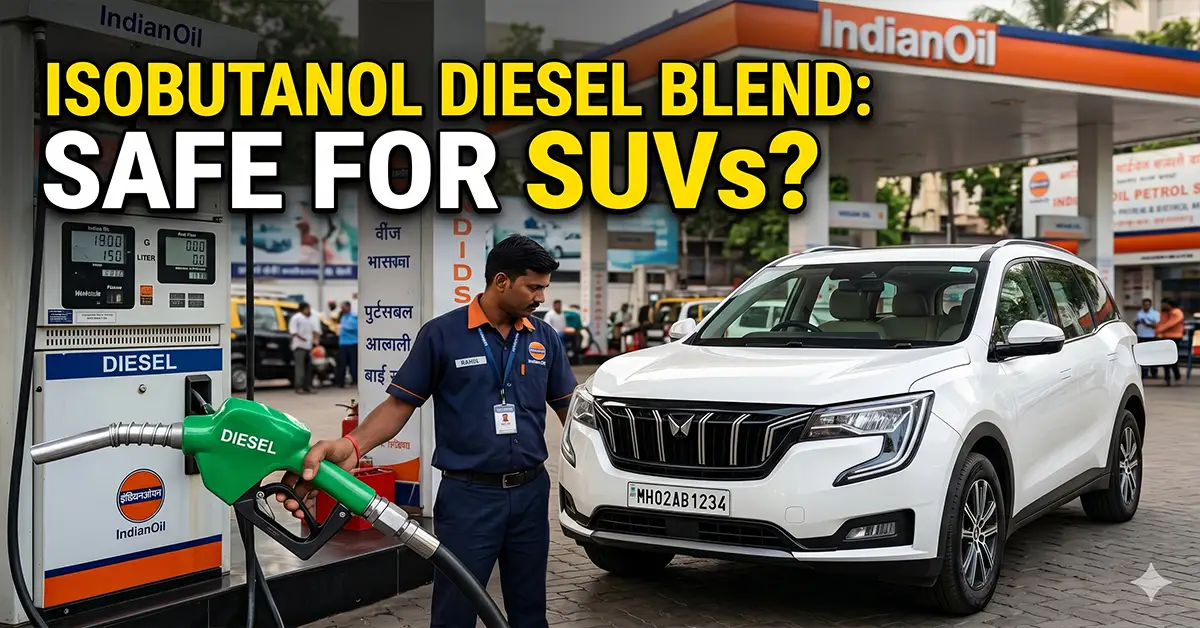
Are you worried about how upcoming fuel regulations will affect your diesel car or heavy-duty truck? Following the successful nationwide rollout of E20 petrol, a new isobutanol diesel blend mandate in India is officially on the horizon. Designed to combat tailpipe pollution and slash expensive crude oil imports, this revolutionary green fuel push in India could change how we drive. Let’s explore exactly what this alternative fuel is, why the government is pushing it, and whether it is safe for your vehicle’s engine.
What is the Isobutanol Diesel Blend Mandate in India?
In a massive step toward decarbonising the transportation sector, the Indian government is reportedly preparing to mandate the mixing of isobutanol with conventional diesel fuel. Recently, V. Umashankar, Secretary at the Ministry of Road Transport and Highways (MoRTH), confirmed at a CII Summit that the proposal is being evaluated with “great seriousness.”
Because diesel consumption in the nation is almost double that of petrol, officials believe this blending strategy will have a significantly larger impact on the economy than the current ethanol blending in petrol.
Currently, Bharat Petroleum diesel research teams are conducting strategic testing to ensure the blend meets all necessary combustion and lubricity requirements. Given the highly encouraging initial results, experts suggest that the official blending mandate could be rolled out later this year.
Also Read: ₹10,000 Fine? Surviving the No PUC No Fuel Policy in Delhi NCR
Why Choose Isobutanol Over Ethanol for Diesel Engines?
You might be wondering: Why not just use ethanol for diesel as we do for petrol? The answer lies in the complex chemistry of internal combustion engines. Diesel engines ignite fuel through high compression rather than a spark plug. Mixing regular ethanol into diesel can cause severe combustion timing issues and engine knocking.
Isobutanol is fundamentally superior for diesel blending for several reasons:
- Higher Energy Density: Isobutanol packs far more energy per litre than ethanol, meaning diesel vehicles will suffer a much smaller drop in fuel efficiency and overall power.
- Lower Corrosiveness: Unlike ethanol, which is known for drawing in moisture and corroding older engine parts, isobutanol is highly resistant to water absorption.
- Better Miscibility: It mixes seamlessly with existing diesel fuel, preventing separation inside your vehicle’s fuel tank, even during cold weather conditions.
How Will Isobutanol-Blended Diesel Affect Your Vehicle?
If you own a diesel SUV, tractor, or commercial truck, vehicle compatibility is likely your biggest concern. The good news is that the initial phases of the isobutanol diesel blend mandate in India are designed to be completely safe and highly engine-friendly.
Here is exactly how this new fuel blend will affect your daily driving experience:
- No Major Modifications Required: For low-level initial blends (expected to be around the 5% to 10% range), you will not need to make any drastic mechanical modifications to your vehicle’s engine or exhaust system.
- Slight Mileage Drop: Because isobutanol is an alcohol-based biofuel, you may notice a very marginal drop in overall fuel economy compared to pure unblended diesel, though it is far less noticeable than with ethanol.
- Cleaner Exhaust Systems: The biggest advantage for consumers is that isobutanol substantially lowers particulate emissions and soot buildup, which can actually help prolong the life of your vehicle’s Diesel Particulate Filter (DPF).
Also Read: Bullet 650 vs Classic 650 Comparison: Same Price, Huge Differences!
The Economic and Environmental Impact
India currently imports over 85% of its crude oil requirements, placing a massive burden on the national economy. By replacing a percentage of imported diesel with domestically produced isobutanol, the government aims to dramatically reduce crude oil imports and strengthen our energy security.
Furthermore, isobutanol is produced from agricultural feedstocks like sugarcane, corn, and biomass. This creates a massive secondary income stream for local farmers, turning the agricultural sector into a domestic energy powerhouse. Ultimately, it is a win-win scenario that boosts the local economy while simultaneously clearing the smog from our cities.
What’s Next? Testing and Future Prospects
The government is not just stopping at low-percentage blends. To future-proof the commercial transport industry, the ministry has officially commissioned an ARAI flex-fuel engine study. This research aims to develop advanced diesel engines capable of running on up to 100% pure isobutanol.
While heavy-duty electric trucks and hydrogen logistics are currently being tested on corridors like the Delhi-Mumbai Expressway, isobutanol offers an immediate, bridge-technology solution. It works with millions of diesel vehicles already on the road today, requiring no immediate changes to existing petrol pump infrastructure.
Conclusion
The upcoming isobutanol diesel blend mandate in India represents a masterstroke in the nation’s journey toward sustainable mobility. By opting for a superior, high-energy biofuel that plays nicely with existing diesel engines, the government is ensuring a smoother transition for consumers and fleet operators alike. While a slight dip in mileage might be a side effect, the overwhelming benefits—ranging from lower tailpipe emissions to immense national energy security—make this green initiative a necessary step for our country’s future.
Also Read: Why the BMW M 1000 RR Isle of Man TT Edition is a Masterpiece
FAQs (Frequently Asked Questions)
1. What exactly is isobutanol?
Ans: Isobutanol is an alcohol-based biofuel that can be produced from renewable agricultural resources like sugarcane and biomass. It has a higher energy density than regular ethanol, making it an excellent alternative fuel additive.
2. Will the isobutanol diesel blend damage my old diesel car?
Ans: No. At low blending percentages (typically 5% to 10%), isobutanol is highly compatible with existing internal combustion engines. It is less corrosive than ethanol and does not require costly mechanical modifications.
3. When will the isobutanol blending mandate start in India?
Ans: According to recent statements from the Ministry of Road Transport and Highways, the initial mandate and phased rollout are expected to begin later this year.
4. Will my vehicle’s mileage drop with this new blended diesel?
Ans: Because biofuels naturally have slightly less energy density than pure fossil fuels, you might experience a very minor reduction in fuel efficiency. However, the drop is significantly smaller compared to running on ethanol-blended fuels.
5. Why can’t we just use ethanol in diesel vehicles?
Ans: Diesel engines rely on high-pressure compression ignition. Ethanol ignites poorly under these conditions and attracts moisture, which can severely damage a diesel engine over time. Isobutanol has chemical properties that are much closer to conventional diesel, making it the safer choice.